
From Mexico to Haiti, families honor their dead on November 1st and 2nd

By NAGO News
2 min read
On November 1st and 2nd, families in many countries remember their deceased. Mexico offers the best-known version of these days, according to the three media outlets that describe them: Cubadebate, N Digital, and RFI. Practices differ from one community to another. Some favor a festive atmosphere, others more intimate religious ceremonies, N Digital specifies.
Altars to welcome souls
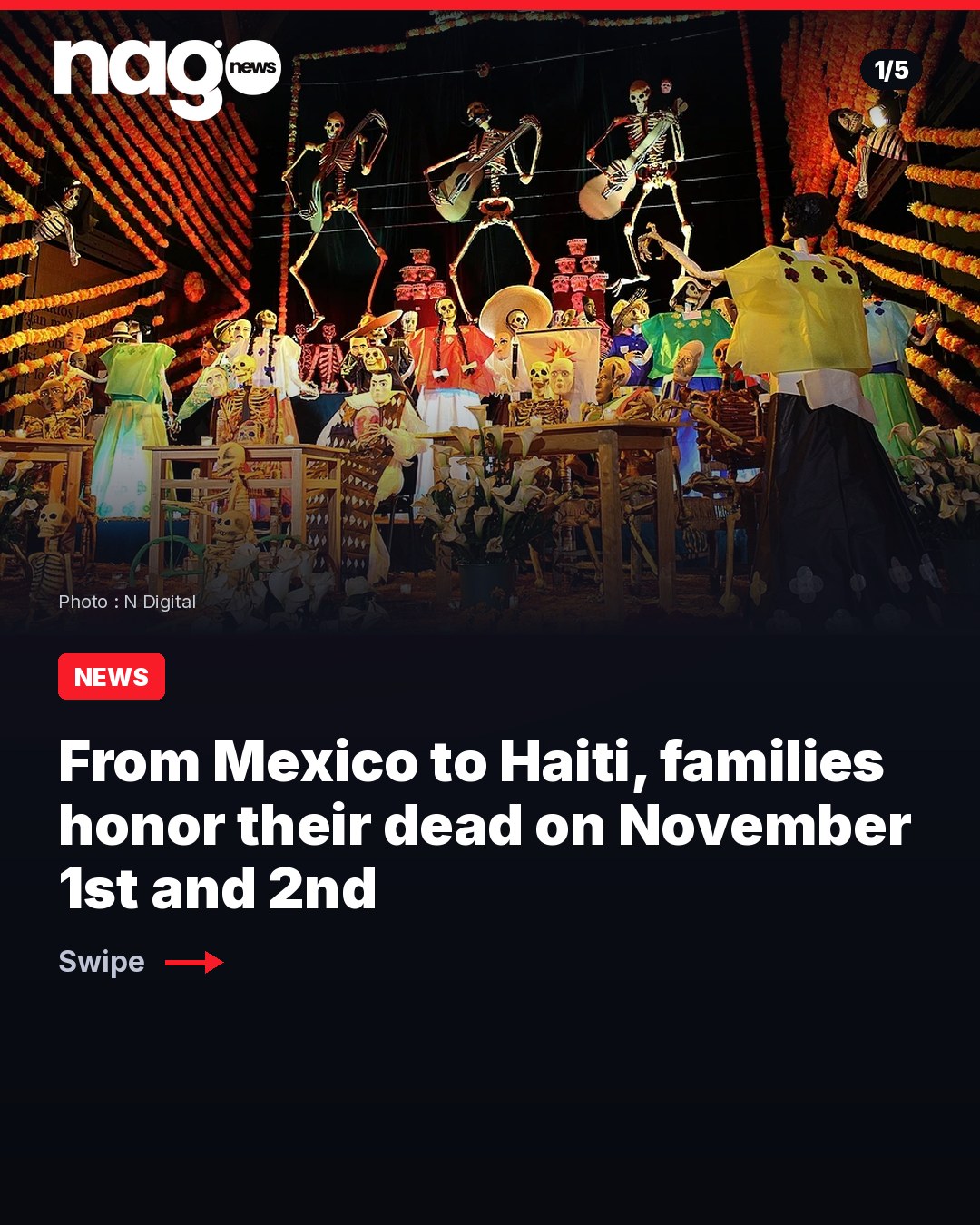
Cubadebate describes streets filled with orange flowers, lit candles, and faces made up as elegant skulls. The festivities begin in October and continue until November 1st and 2nd. It is believed that the souls of the departed return for a time to reunite with their loved ones.
RFI visited Mixquic, a small village on the outskirts of the capital. Families there finish their preparations, and the altar dedicated to deceased loved ones is a crucial step before the night spent at the cemetery.
N Digital details the contents of these altars: photographs, candles, flowers, and dishes and drinks that the deceased enjoyed. Petals sometimes litter the ground to symbolize the path home. Families also visit graves, decorate them, and share the bread of the dead. The Mexican festival was inscribed in 2008 on UNESCO's Representative List of the Intangible Cultural Heritage of Humanity, following an initial proclamation in 2003.
Giant kites in Guatemala
Still according to N Digital, on November 1st, the communities of Sumpango and Santiago Sacatepéquez display immense kites made of colored paper, adorned with drawings and messages. According to traditional beliefs, they connect the world of the living to that of the dead. Families also go to the cemetery, decorate the graves, and prepare a traditional dish of vegetables and meats.
Haiti and El Salvador
In Haiti, Fèt Gede takes place during the first days of November. N Digital links it to the beliefs of Haitian Vodou and the remembrance of ancestors. In some communities, the festival includes music, drums, dancing, and visits to cemeteries. Participants may wear black, white, and purple, colors associated with the spiritual representations of the Gede. The media outlet emphasizes that this religious and cultural tradition differs from the Mexican festival.
In El Salvador, families decorate graves with flowers and pray for their deceased. In Tonacatepeque, La Calabiuza brings together characters from Salvadoran popular legends. This event takes place on a nearby date, but it has its own characteristics and should not be confused with the Mexican celebrations.
Watch and share
The reel and the cards for social media.
Videos
Watch now.
Reporting by N Digital
Comments 0