
#MIZIK · Live feed
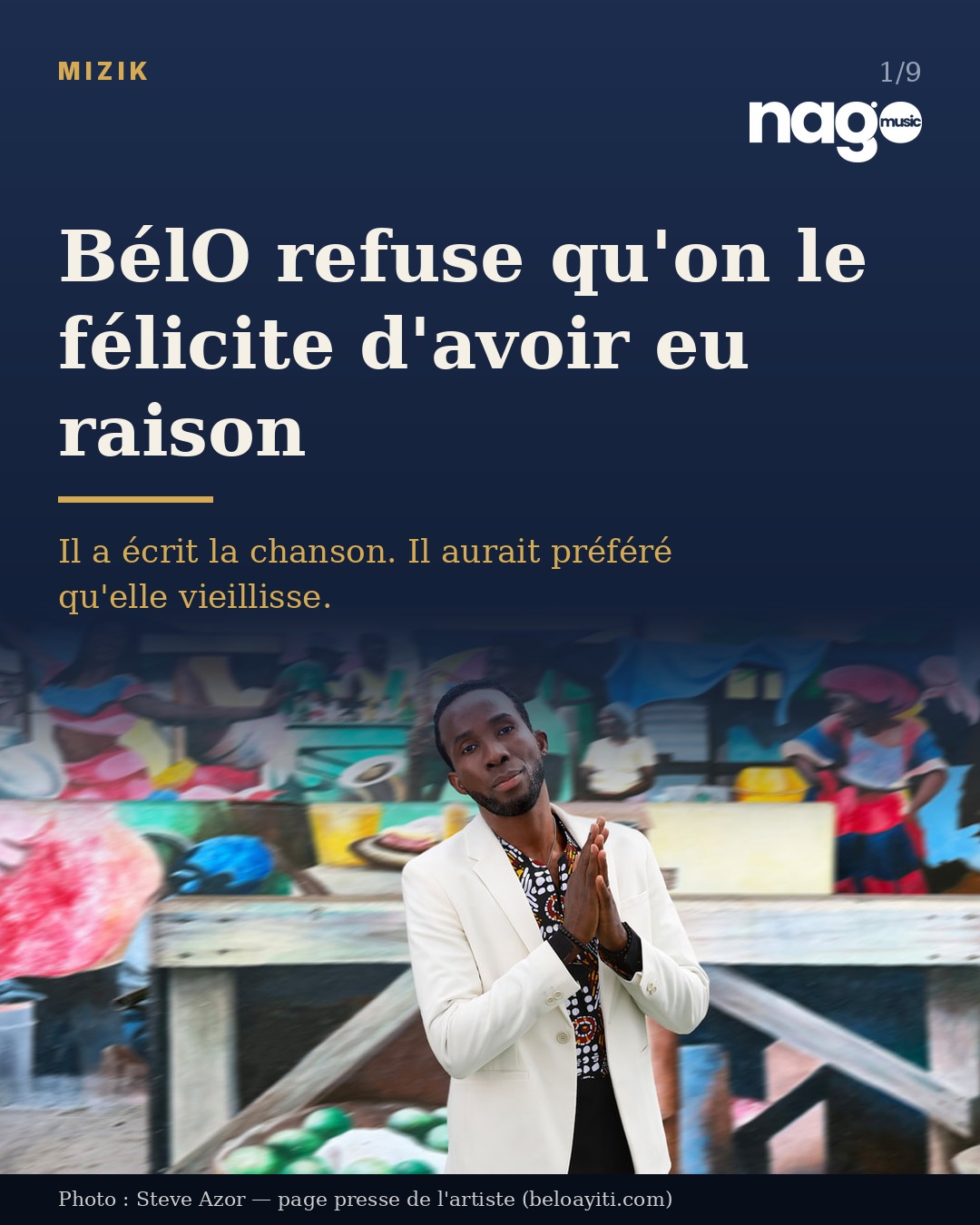
BélO refuses to be congratulated for having been right

By NAGO News
5 min read
"Ti Jean" is the eldest of eight children; the song blames the society that failed him and asks that he be sent to school rather than into a fight.
Fifteen years later, people tell him he saw it coming. He declines the compliment. In an hour-long interview given to Maxcy Céant for the programme Max Reports, during a visit to New York, the singer answers two things. First that he is no prophet, and that he did not choose to write that song: it came to him. Second that he is not prepared to take the slightest pride in it, because he sincerely wanted his music to help prevent the situation the country is now in.
What hurts, he says, is not that his songs are being rediscovered but that they remain current. As an artist he can be glad he lent his voice to it. As a Haitian citizen he observes that nothing has moved.
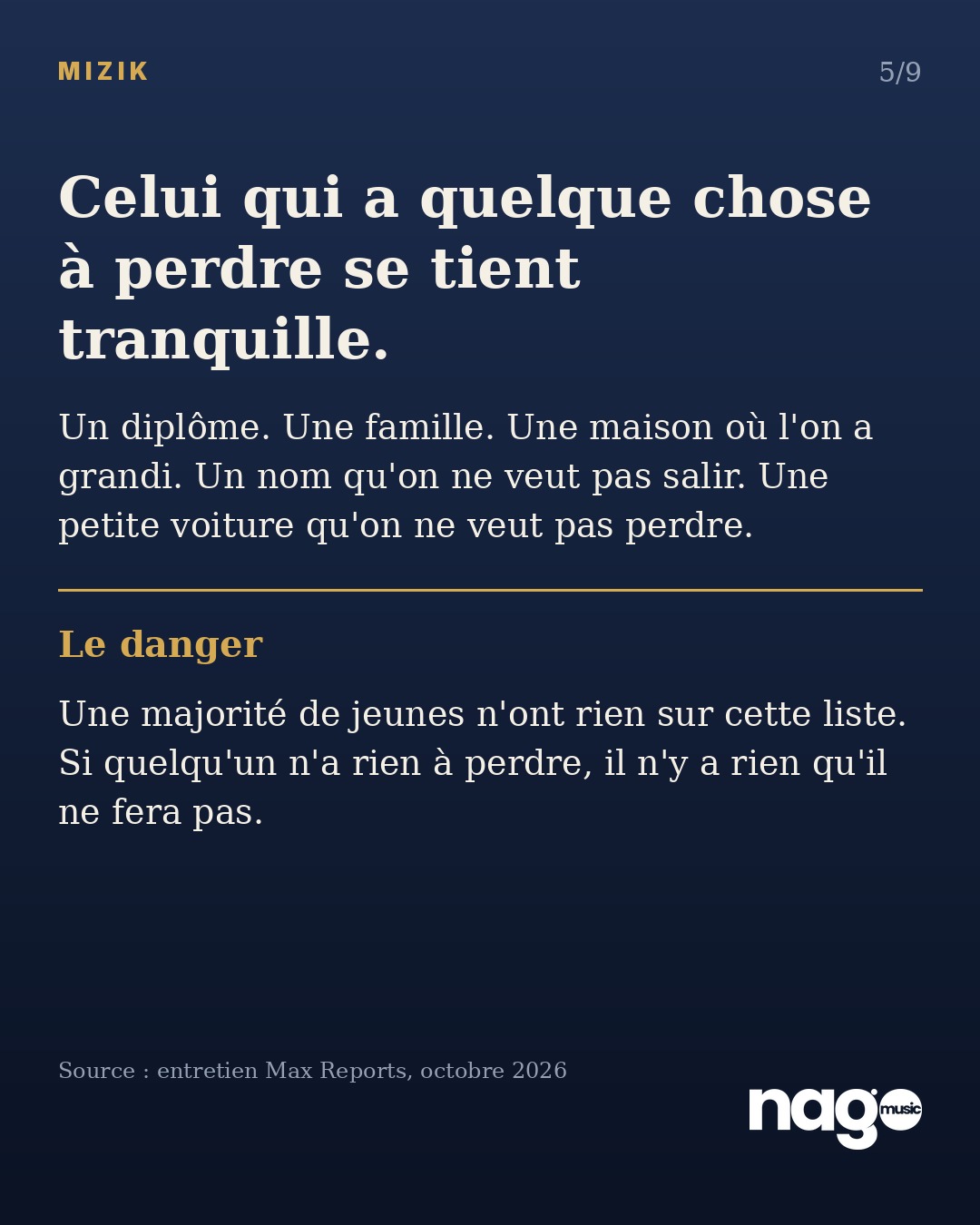
He pushes the argument past the song. A man who owns something stays quiet: a diploma, a family, a house he grew up in, a name he does not want to spoil, a small car he does not want to lose. It is a list of things to lose, and it is often enough to hold back an arm. The danger, he continues, lies in a majority of young people with nothing on that list. If someone has nothing to lose, there is nothing he will not do. Those holding a gun today might have had something else to hold had they been put in school and given a minimum.
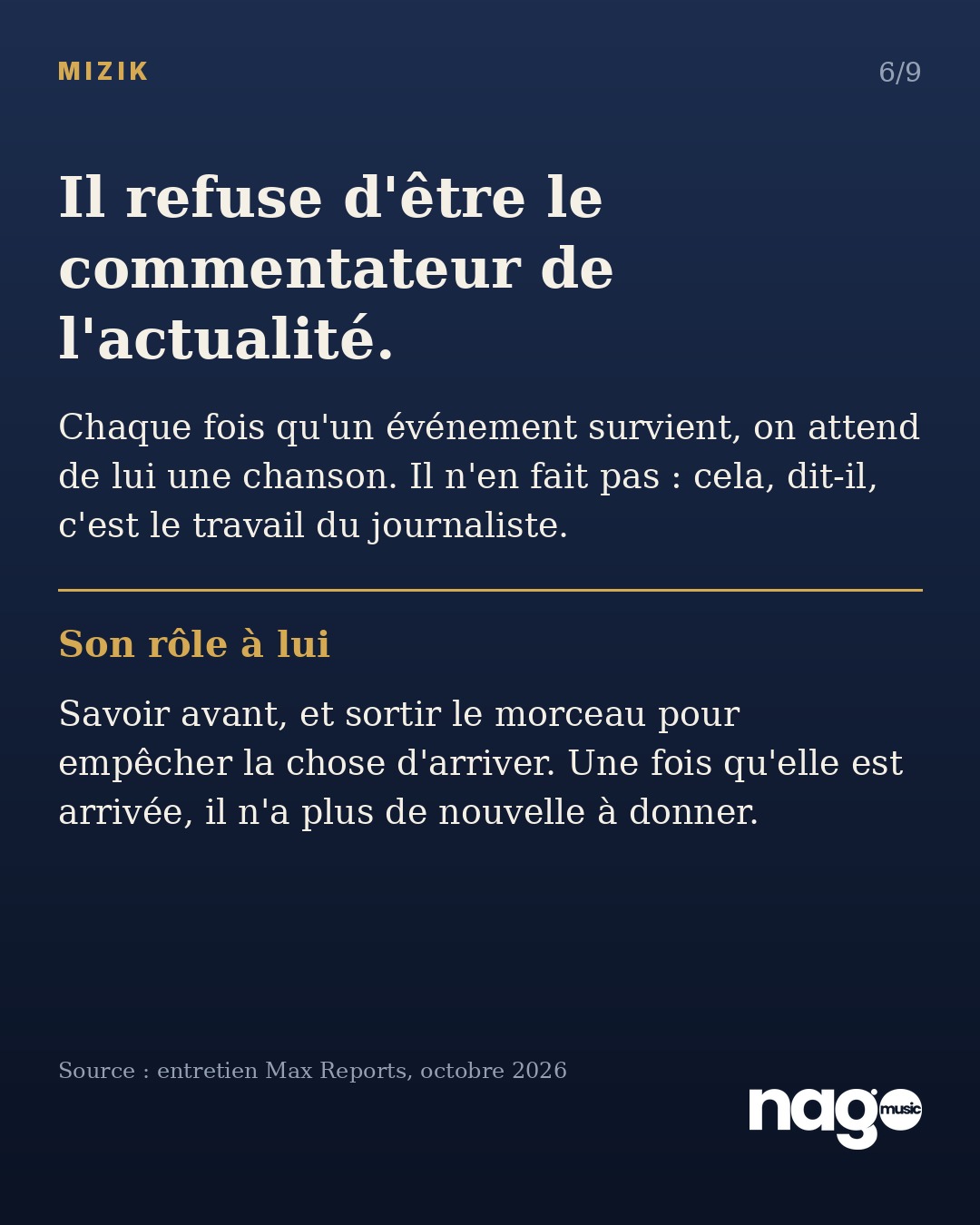
BélO also refuses the role of commentator. Every time something happens, he explains, a song is expected of him; he does not make one. That, he says, is the journalist's work. His own was to know beforehand, and to put out the song to stop the thing happening. Once it has happened, he has no news to give.
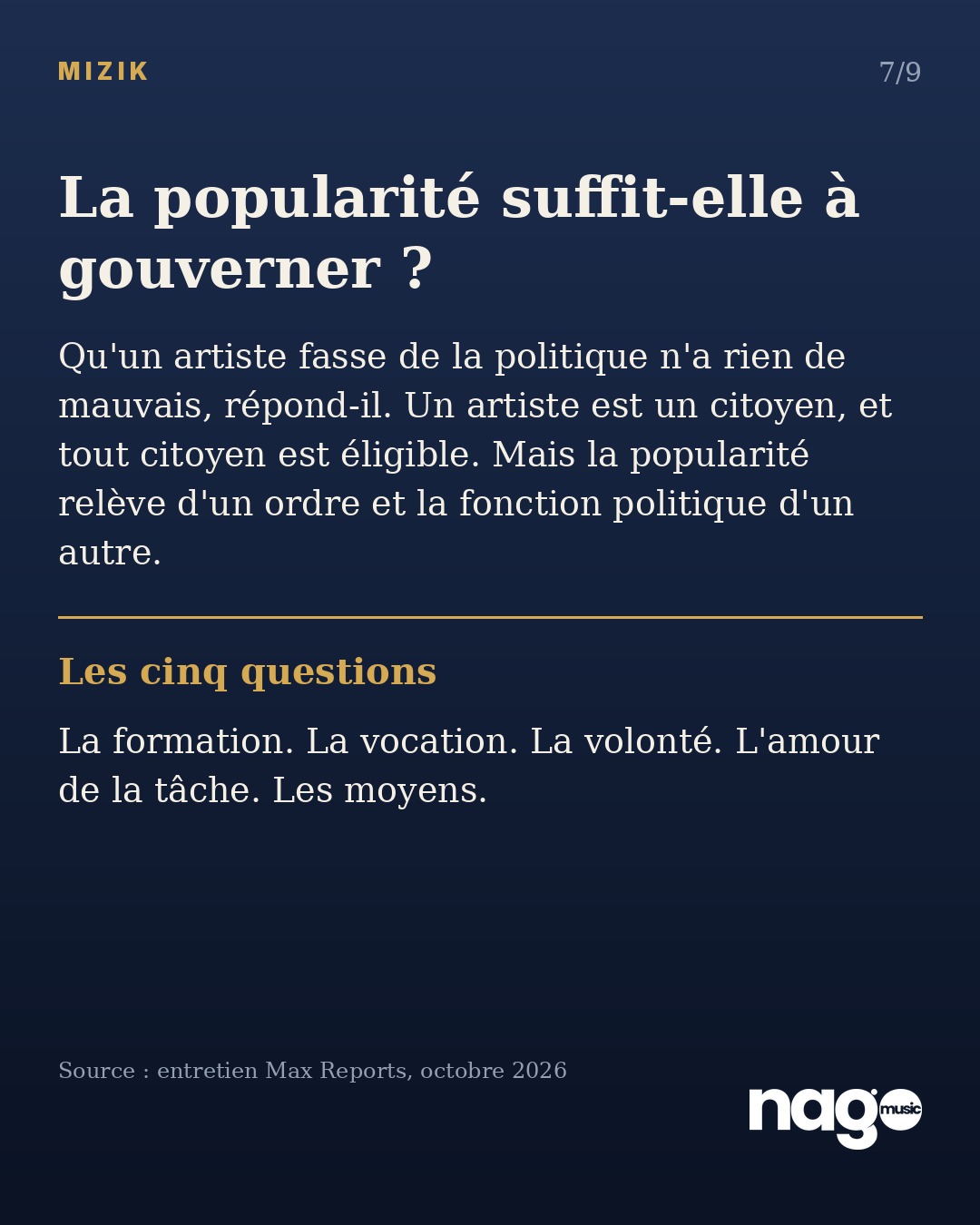
The same restraint governs the rest of the interview. He was asked whether an artist's popularity was enough to carry him into elected office, as far as the presidency. There is nothing wrong in itself with an artist entering politics, he answers; but popularity belongs to one order and political office to another. An artist is a citizen, and every citizen is eligible. The question is therefore not the right to stand, but the exercise of power. So he breaks it down: training, vocation, will, love of the task, means.
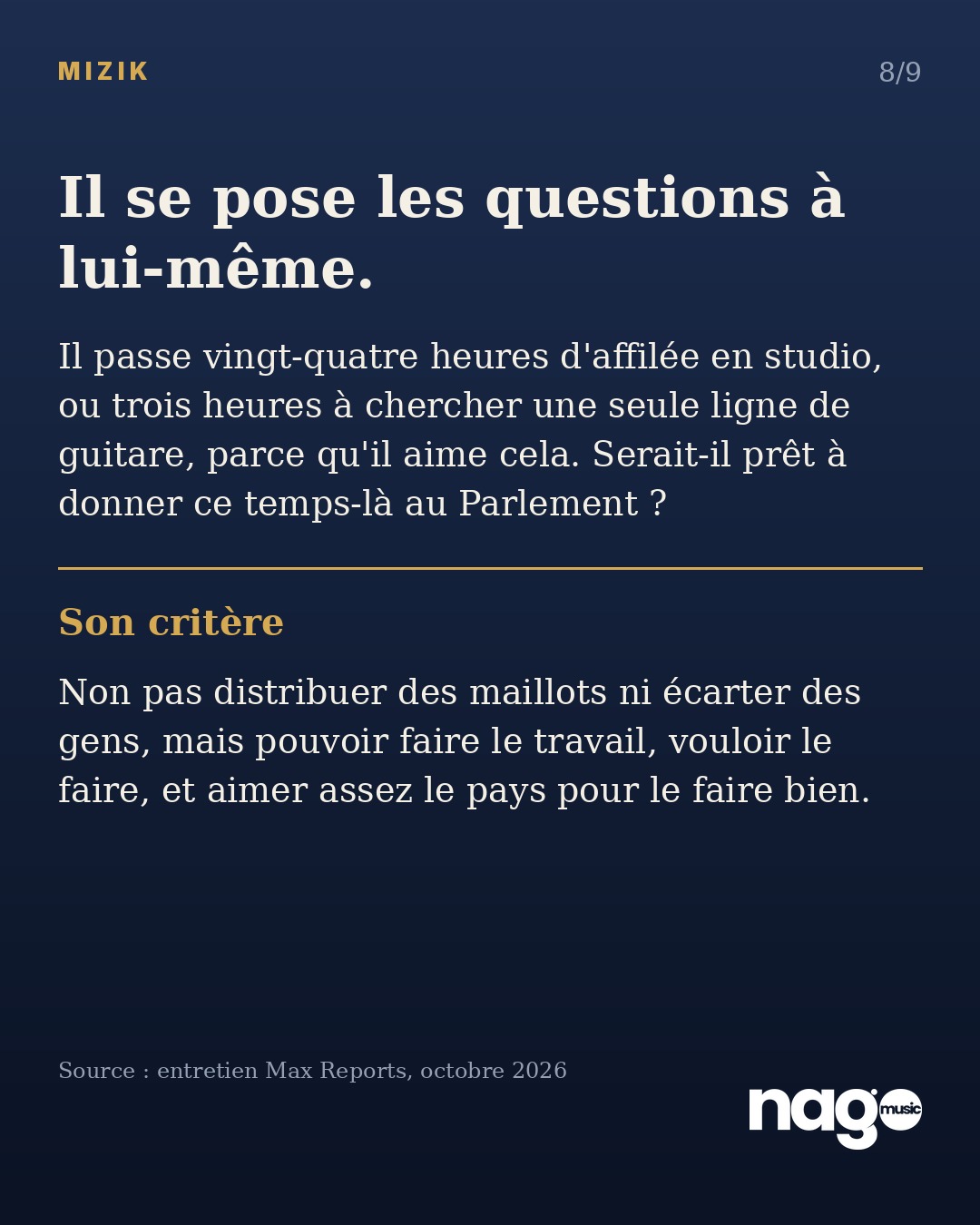
He knows the opposing argument and makes it himself — the artist sings, he preaches, he has an audience and therefore a message capable of carrying change — and meets it with one sentence: having a public says nothing about the ability to do the job. Then he turns the questions on himself, which is rarer. He describes twenty-four hours straight in a studio, or three hours spent hunting a single guitar line, because he loves it, and asks whether he would be ready to give that time to Parliament, to vote laws that make things work. His conclusion takes aim at a practice Haitians know: the test is not handing out jerseys or pushing people aside, but being able to do the work, wanting to do it, and loving the country enough to do it well.
He applies the same refusal of rankings to his colleagues. Those the public calls his competitors are, he says, his best collaborators, and he claims twenty-one years of career without a single enemy. The reason he gives is not diplomacy. He describes himself as a receiver; conflict and hypocrisy jam the signal, and he keeps himself receptive for that reason. It is also how he writes, or rather does not write: he sings from memory, never set out to compose in verse, and puts his songs down to inspiration, subjects included.
Another excerpt shows him off stage. In the car, he says, he is not an artist but a father, the one who takes out the bin and changes a nappy. He explains that he has never exposed his children to his fame. The singer has lived in Belgium since around 2024, a move he explained at the time by their schooling.
The interview owes its audience to an older song still. In early October the rapper Wendyyy quoted BélO on "Pi", released on 4 October, sending a whole generation back to "Jasmine", a track from "Lakou Trankil", his first album, released in 2005. BélO thanked him publicly, reporting a rush of subscribers to his YouTube channel; Juno7, Bèlide Magazine and AyitiBoost all carried his post. The closing track of "Dizan" is precisely "Jasmine", sung with BIC and Moony Rich.
So the man who refuses to be ranked against anyone has spent twenty-one years handing his songs to other voices. He would have preferred them to age.
This article was corrected on October 27, 2026.
Gade ak pataje

9 kat · glise sou kote
Reporting by Max Reports, « BélO reyaji apre Wendyyy fin fè l yon gwo Big Up nan Pi » (octobre 2026)
Juno7, « Jasmine de BélO renaît plus de vingt ans après grâce à Pi de Wendyyy » (6 octobre 2026)
Bèlide Magazine, « BélO reconnaissant envers Wendyyy » (5 octobre 2026)
AyitiBoost, « Jasmine de BélO reprend vie grâce à Pi de Wendyyy »
BélO, photos de presse (beloayiti.com)
Comments 0