
#ÉDITORIAL · Live feed
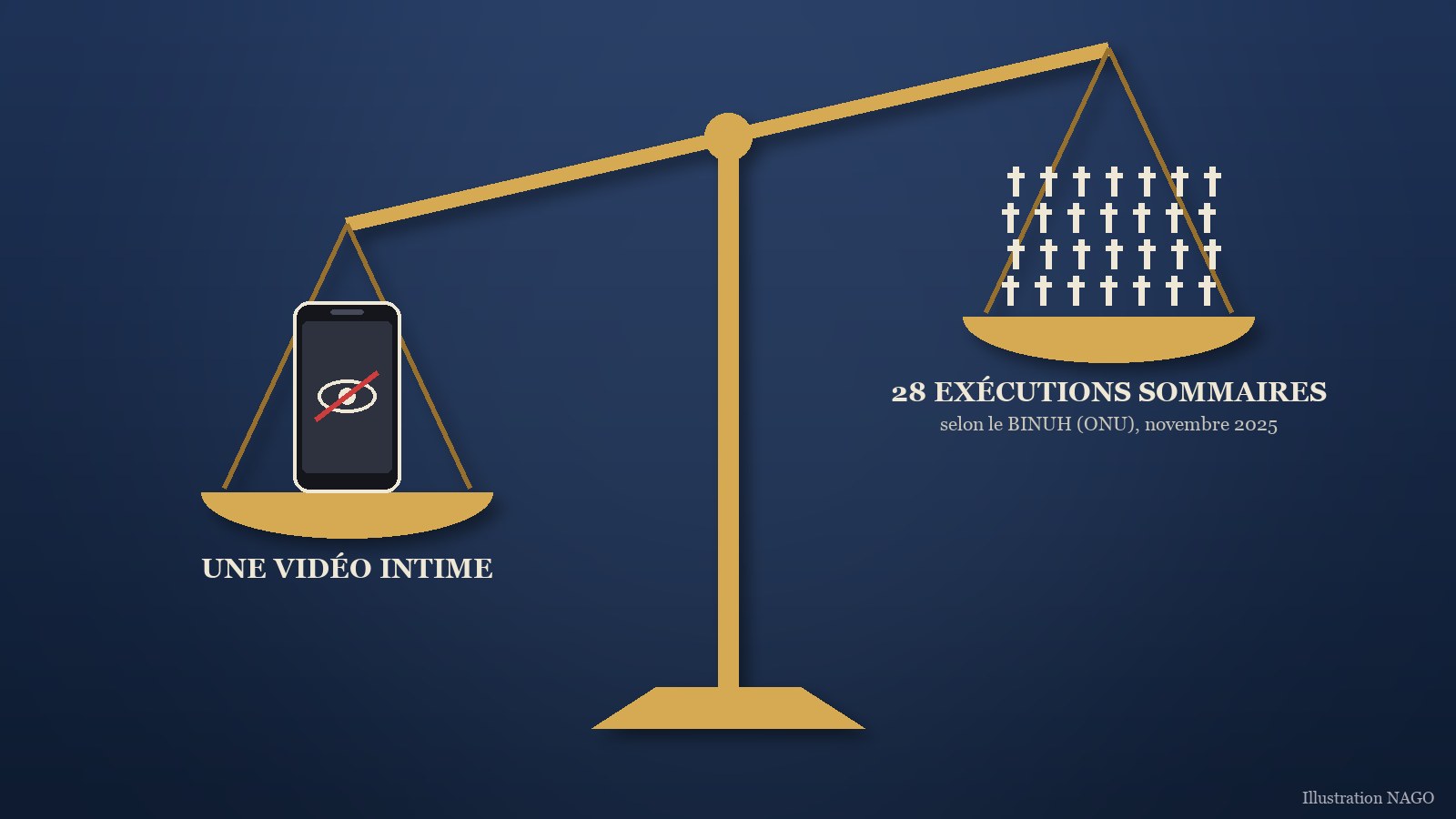
An intimate video kills no one
By La rédaction de NAGO
4 min read
In two lines on Facebook, Josué Estinvil put his finger on a contradiction many would rather not see. Some people, he wrote, want to make Jean Ernest Muscadin president precisely because he has killed, while others shudder at the idea of Roselande Bélony becoming a deputy because intimate videos of her are circulating in the street.
The line is blunt. Above all, it is right. A society is judged by what frightens it, and ours seems more afraid of a young woman's private life than of death handed out without trial. Let us take this contradiction seriously, because it will weigh on voters' choices.
Start with the facts. Jean Ernest Muscadin headed the prosecutor's office in Miragoâne from 2019 until his resignation, filed on October 29, 2026, to run for president under the banner of Fòs Chanjman Nasyonal. As early as November 2024, the National Human Rights Defense Network (RNDDH) attributed at least twenty summary executions to him. A year later, the United Nations Integrated Office in Haiti (BINUH) counted at least 28 over two quarters, including 27 people executed "with complete impunity" in a single quarter. He himself promised his jurisdiction would be a "cemetery for bandits," Vant Bèf Info reports, and he told a television audience that Jovenel Moïse had told him bandits must either die or leave the area.
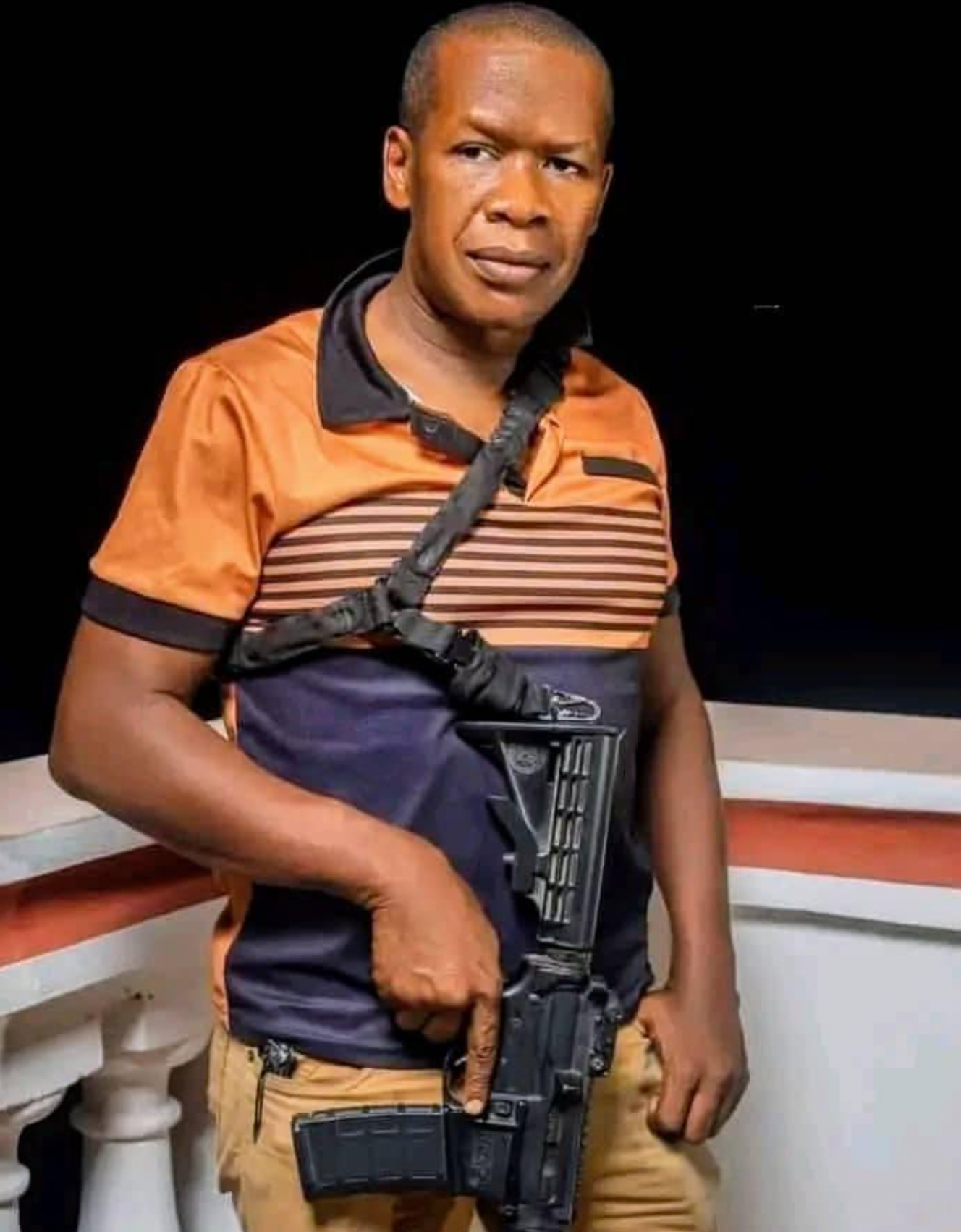
This is not a trial of intentions. A prosecutor's job is to prosecute, not to execute. As far back as December 2023, Justice Minister Emmelie Prophète Milcé reproached him in writing for setting his own rules outside legal norms. When the person charged with enforcing the law decides alone who lives and who dies, there is no law left, only a man. What would become of that logic at the head of the state, with the police, the weapons and the budget in hand?
Now set the other fear beside it. Roselande Bélony was about twenty, a former first runner-up in Miss Teen Kiskeya and a young voice in the media, when intimate videos of her were spread without her consent in April 2025. According to her father, Serge Bélony, her phone had been stolen at gunpoint. What followed was insults, rumors and judgment reaching all the way into her church. On April 14, 2025, the RNDDH, the POHDH and journalists held a sit-in to defend her. She committed no crime. She suffered one.
An intimate video robs no one, burns no house, empties no neighborhood. It says nothing about a woman's ability to vote on a law or hold a minister to account. The fault lies with those who released it and those who keep sharing it. We should add that we found no candidacy by Roselande Bélony in the Provisional Electoral Council's register: a mere rumor was enough to reopen the trial.
This double standard has a name: we forgive men their violence, and we do not forgive women their bodies. It partly explains why so few women run. And it thrives in a void: in April 2025, lawyers and human rights defenders pointed out that Haiti has no clear law against sharing intimate images without consent, and we found no trace of any prosecution of those who spread these videos.
One can plead survival. Gangs have not settled in the Nippes, Muscadin's supporters say, and on November 17, 2025, thousands of people marched in Miragoâne to defend him. That fear is real and legitimate. But it calls for a police force that holds and a justice system that tries cases, not a vigilante. Security obtained outside the law is paid for one day, and often by the innocent.
Let us be fair. Jean Ernest Muscadin has not been charged, prosecuted or tried for the acts the UN and the RNDDH attribute to him. He is not on the Security Council's Haiti sanctions list. His popularity in the Grand Sud is a fact, and his departure from the prosecutor's office worries people there. He has the right to run if the CEP validates his file. We found no detailed response from him to the BINUH report: his spokesperson said only that he preferred to let the people of Miragoâne speak for him.
So he must speak. Jean Ernest Muscadin must say plainly whether a president may order or approve the death of a suspect without trial. The Parliament that comes out of the ballot box must finally pass a law punishing the sharing of intimate images without consent. And voters, in Haiti and in the diaspora, must judge candidates on their public acts, not women on their private lives.
An intimate video kills no one. Executions without trial do. It is the second that should frighten us in the voting booth.
Videos
Watch now.
Reporting by The Haitian Times, rapport du BINUH sur Jean Ernest Muscadin (18 novembre 2025)
Rhinews, le RNDDH demande la démission de Jean Ernest Muscadin
NAGO, démission et candidature de Jean Ernest Muscadin (octobre-novembre 2026)
ONU, liste des sanctions du Conseil de sécurité relative à Haïti
Haiti Infos Pro, « Une vidéo, mille juges » (15 avril 2025)
Media Libre, la mise au point de Serge Bélony (19 avril 2025)
Le Quotidien 509 (18 avril 2025)
By La rédaction de NAGO
 Tom Laperche wins the Route du Rhum in his first attempt and breaks the recordTom Laperche won the 13th Route du Rhum in Pointe-à-Pitre in 6 days, 13 hours, and 27 minutes. He beat the benchmark time set by C…
Comments 0