
A look back at Michel Martelly's presidency, 2011 to 2016
Michel Martelly has registered online to seek another presidential term, under the banner of the DEBLOKE grouping. The public dashboard of the Provisional Electoral Council (CEP), updated on 17 October at 1.11pm, records sixteen presidential candidates — sixteen men, no women — out of 4,597 candidacies for all offices combined. Registration, open since 20 August, closes on 31 October. The CEP warns that the figures shown are dynamic and strictly preliminary, and that the official and final list of candidates will be published only after files have been checked and validated. Before standing as a candidate, Michel Martelly was president: from May 2011 to February 2016.
GAdd NAGO.TV to your Google sources
By NAGO News
2 min read
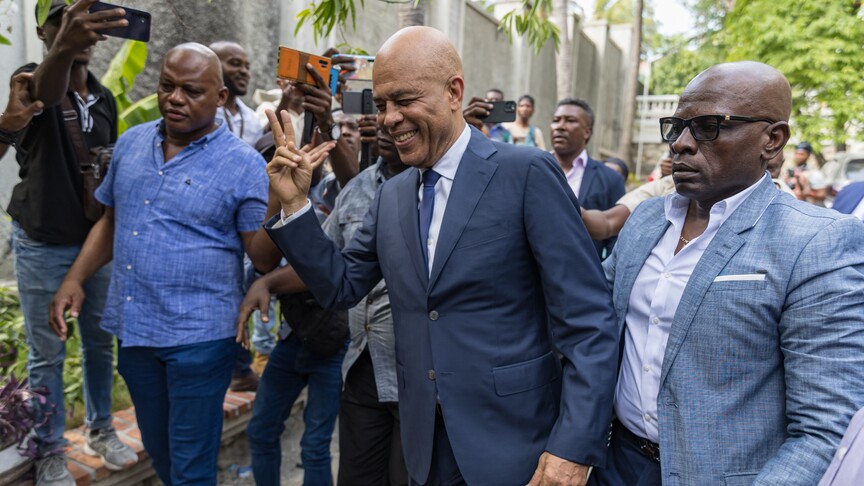
A singer carried to power in 2011
Known by his stage name Sweet Micky, Michel Martelly came third in the first round of the 2010 presidential election. It was the withdrawal of Jude Célestin, obtained under pressure from the Organization of American States after fraud allegations, that opened the runoff to him against Mirlande Manigat on 20 March 2011. He won with more than 60% of the vote and was sworn in on 14 May 2011, succeeding René Préval — a handover presented at the time as the first peaceful transfer of power from a sitting president to an opponent.
A lapsed parliament and rule by decree
The legislative elections expected from 2011 onwards were put off year after year, against a background of deadlock between the presidency and the opposition over the electoral law.
Several candidates denounced the results; the outgoing president openly backed Jovenel Moïse. Michel Martelly left power in February 2016 with no elected successor, and Jocelerme Privert took over on an interim basis. In May 2016, a commission set up by Privert examined some 13,000 tally sheets, concluded the vote had been tainted and recommended starting over.
The sanctions hanging over the new candidacy
Since the end of his term, Michel Martelly has been hit by successive sanctions: Canada in November 2022, over gross and systematic human rights violations and alleged support for armed groups; the United States in August 2024, with the Treasury accusing him of helping create an environment conducive to drug trafficking, together with a ban on entering American territory; the European Union in December 2025. The former president rejects these accusations. He does not appear on the United Nations Security Council sanctions list, although UN experts have implicated him in the financing of armed groups. Having returned to Haiti on 15 July 2026 after years abroad, he now comes before a CEP that the RNDDH had already asked, in early October, to rule on whether such a candidacy is admissible.
This article was corrected on October 17, 2026.
Reporting by CEP — tableau de bord des candidatures
Comité des sanctions des Nations unies sur Haïti (2653)
Comments 0