
#EDITORIAL · Live feed · Ouest
Let's judge Jerry Tardieu by his deeds
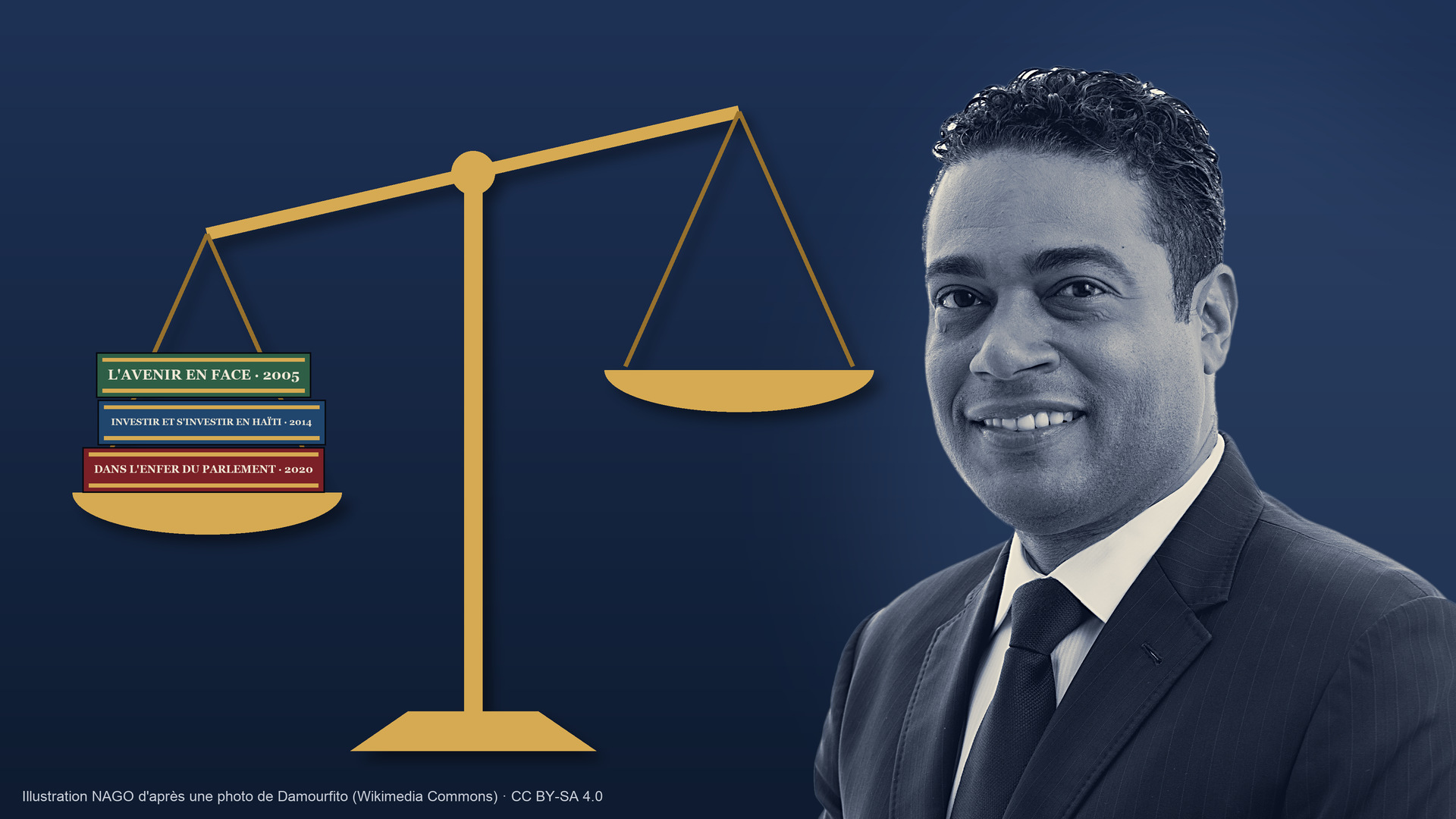
By La rédaction de NAGO
5 min read
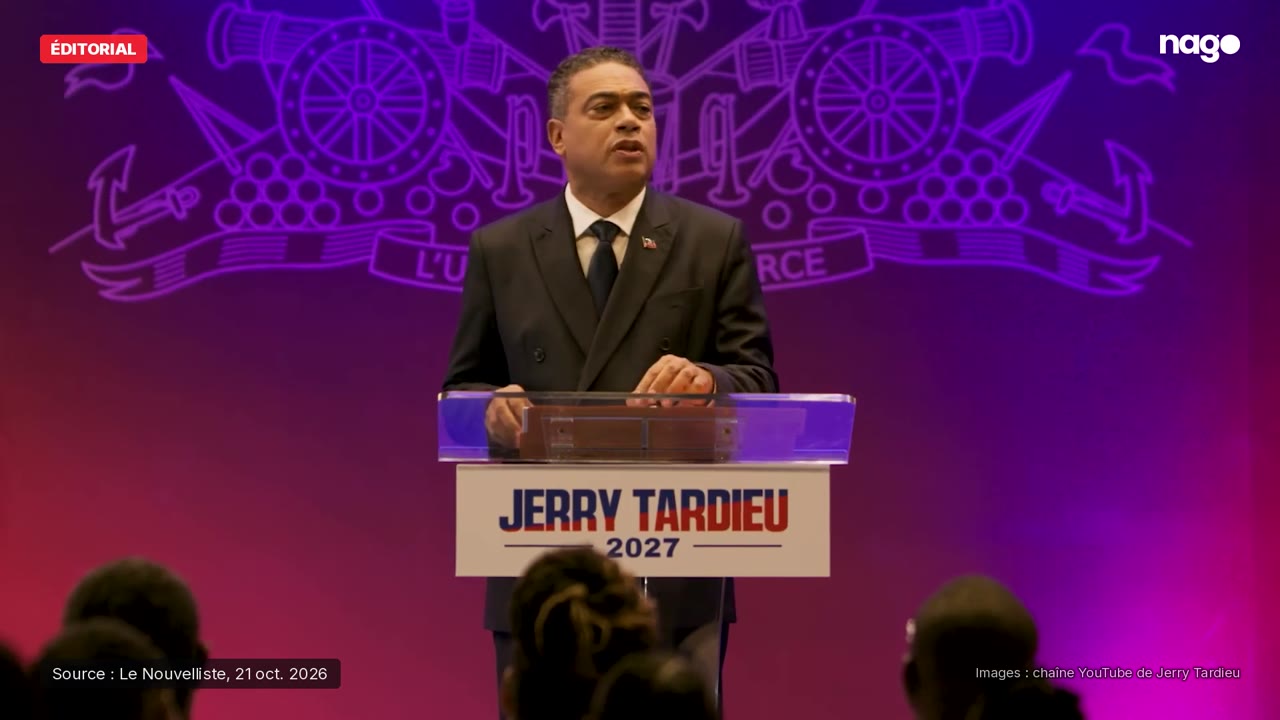
"I am a candidate because I have the experience, the skills and a solid, reliable team." Jerry Tardieu wrote that sentence on Wednesday, October 21, the day he became the 17th registered candidate for president. In the same statement, he asks to be judged "by his actions." Let's take him at his word.
What experience? Jerry Tardieu has never governed. He has never run a ministry, an administration or a public budget. His only elected office was deputy for Pétion-Ville, from 2016 to 2020. He won it under the banner of the Vérité party, with the best score in the country, as he likes to point out.
He tells the story of those four years best himself. In June 2020, he presented his book Dans l'enfer du Parlement ("In the Hell of Parliament") to Le Nouvelliste. In it, he says, he recounts "the fate of my many bills, which were systematically torpedoed." His bill on lease financing was already gathering dust in the Chamber's drawers in 2017; a leasing law only came into force in May 2020, by government decree, after his term had ended, and he says it was his text. His proposal on nationality had received, according to Le Nouvelliste, "no follow-up." He wanted to lead the Chamber and ran into the pro-PHTK majority.
One can plead the excuse: a deputy without a majority cannot pass his bills. That is true, and that is exactly the problem. A president without a majority, without enough police and without a budget will face the same walls, only higher. A man who could not persuade his colleagues in the Chamber owes us an explanation of how he will persuade a Parliament, a police force, donors and gangs.
There is something more telling still. In the Chamber, Jerry Tardieu chaired the special commission charged with amending the 1987 Constitution. It was, in his own words, "one of the most important responsibilities" of that legislature. The Constitution was not amended. His biggest assignment ended the way nearly all his bills did: with nothing to show.
His 2026 platform rests on the same method. He promises to end insecurity in five years, to strengthen the Haitian National Police and the Armed Forces of Haiti, to create a national guard of young people and to make credit easier to get in every department. The diagnosis is right: more than 100,000 young people leave universities and training centers every year, and fewer than one in ten finds work. But the statement says nothing about how much the plan will cost, who will pay for it or how it will be carried out. Juno7 pointed that out.
The youth national guard deserves more than a sentence. Gangs recruit precisely these jobless young people. Arming young people without saying who trains them, who pays them and who commands them would be a dangerous gamble.
That leaves the entrepreneur, whom the candidate puts forward. His flagship project, the Royal Oasis hotel in Pétion-Ville, was restarted after the earthquake thanks in part to $7.5 million from the International Finance Corporation, the World Bank's private-sector arm, and $2 million from the Clinton Bush Haiti Fund. That fund had been created for reconstruction, at a time when hundreds of thousands of quake victims were still sleeping in tents, and the investment was criticized at the time. Jerry Tardieu explained it in February 2013, in an open letter published by Le Nouvelliste: in his account, it was a temporary stake, bought back in 2012, and the fund passed the $2 million on to the Faculty of Science, which CaribJournal confirmed. Nothing suggests any impropriety. But that letter, which describes the hotel as 100 percent financed by private Haitian money, says nothing about the International Finance Corporation's $7.5 million. A candidate who makes credit his central promise would do well to complete the story.
Let's be fair. We found no accusation of ties to gangs and no prosecution for embezzlement against Jerry Tardieu, which is no small thing in this campaign. In his 2019 "J'accuse!" letter, he bravely denounced the record of President Jovenel Moïse. He also sat on the commission that prepared the laws on the financial intelligence unit, UCREF, and on money laundering, both of which passed. He knows how to diagnose, to write and to denounce.
But Haiti does not need one more prosecutor or one more essayist. After five years of transition, the country needs someone who knows how to finish what he starts. Before the first round, Jerry Tardieu should publish a costed platform, a detailed record of his bills and the full financing structure of the Oasis. Voters, at home and in the diaspora, should demand this of him, as of every other candidate.
Jerry Tardieu wants to be judged by his actions. Haitians have read his books. They are still waiting for his deeds.
Correction (October 23, 2026): An earlier version of this editorial said Jerry Tardieu had not explained the Clinton Bush Haiti Fund's investment in the Oasis; he did so in February 2013. It also said none of his bills had come to anything, but a leasing law that he says was his text was enacted by decree in May 2020. The text has been corrected.
Watch and share
The reel and the cards for social media.
Videos
Watch now.
Reporting by Le Nouvelliste (21 October 2026)
Le Nouvelliste, « Quatre années dans l'enfer du Parlement » (9 June 2020)
Le Nouvelliste, « Les combats de Jerry Tardieu » (5 October 2017)
Le Nouvelliste, « J'accuse ! » (3 June 2019)
HaitiLibre, Fonds Clinton-Bush (2011)
Le Nouvelliste, lettre ouverte de Jerry Tardieu au sénateur Steven Benoît (22 February 2013)
CaribJournal, le Fonds Clinton-Bush cède ses parts de l'Oasis (1 January 2013)
Le Nouvelliste, le Fonds Clinton-Bush investit 2 millions dans l'hôtel Oasis (10 May 2011)
Le Nouvelliste, crédit-bail publié par décret (21 May 2020)
Illustration NAGO d'après une photo de Damourfito, Wikimedia Commons (CC BY-SA 4.0)
Comments 0